June 2026: Market Recap and Updates
It's all about condition.
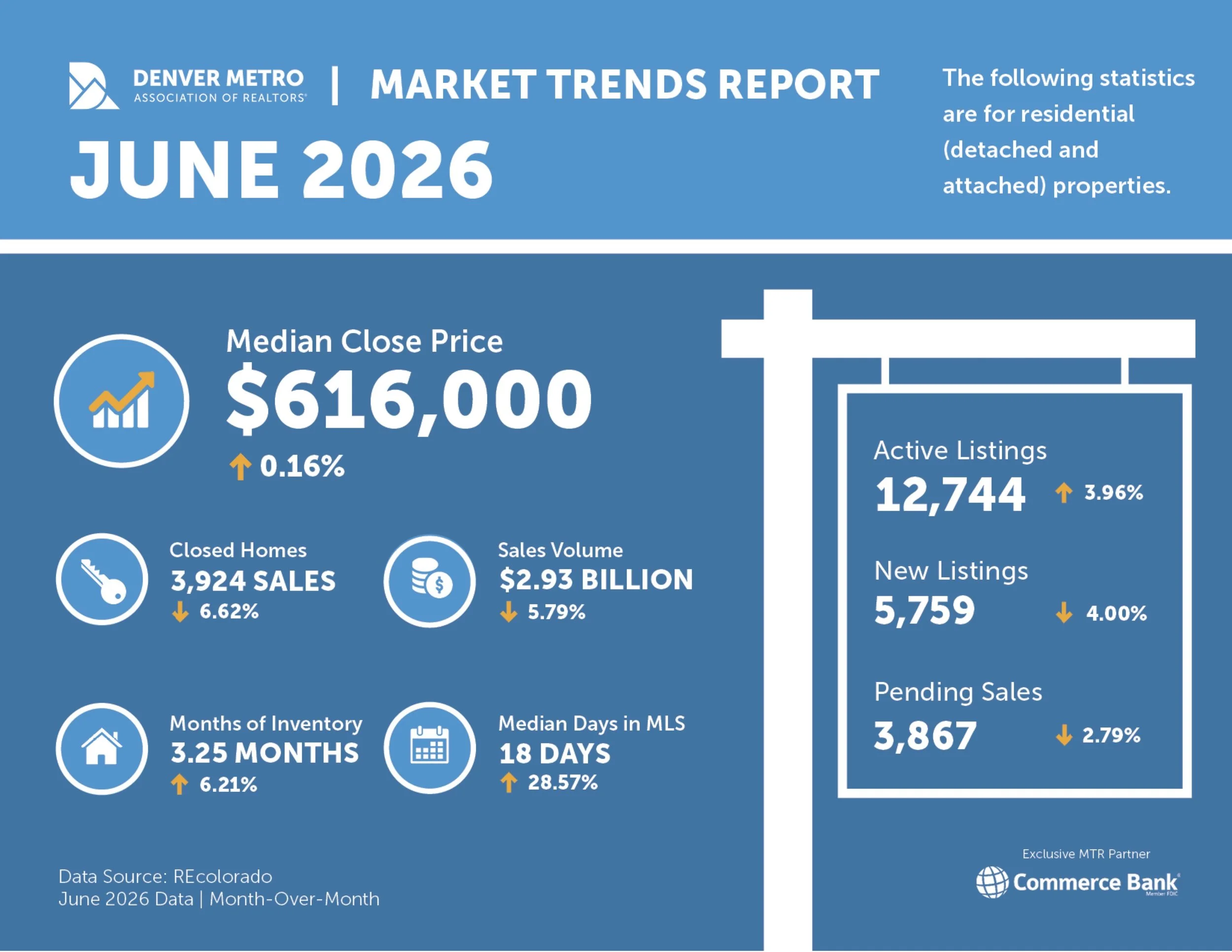
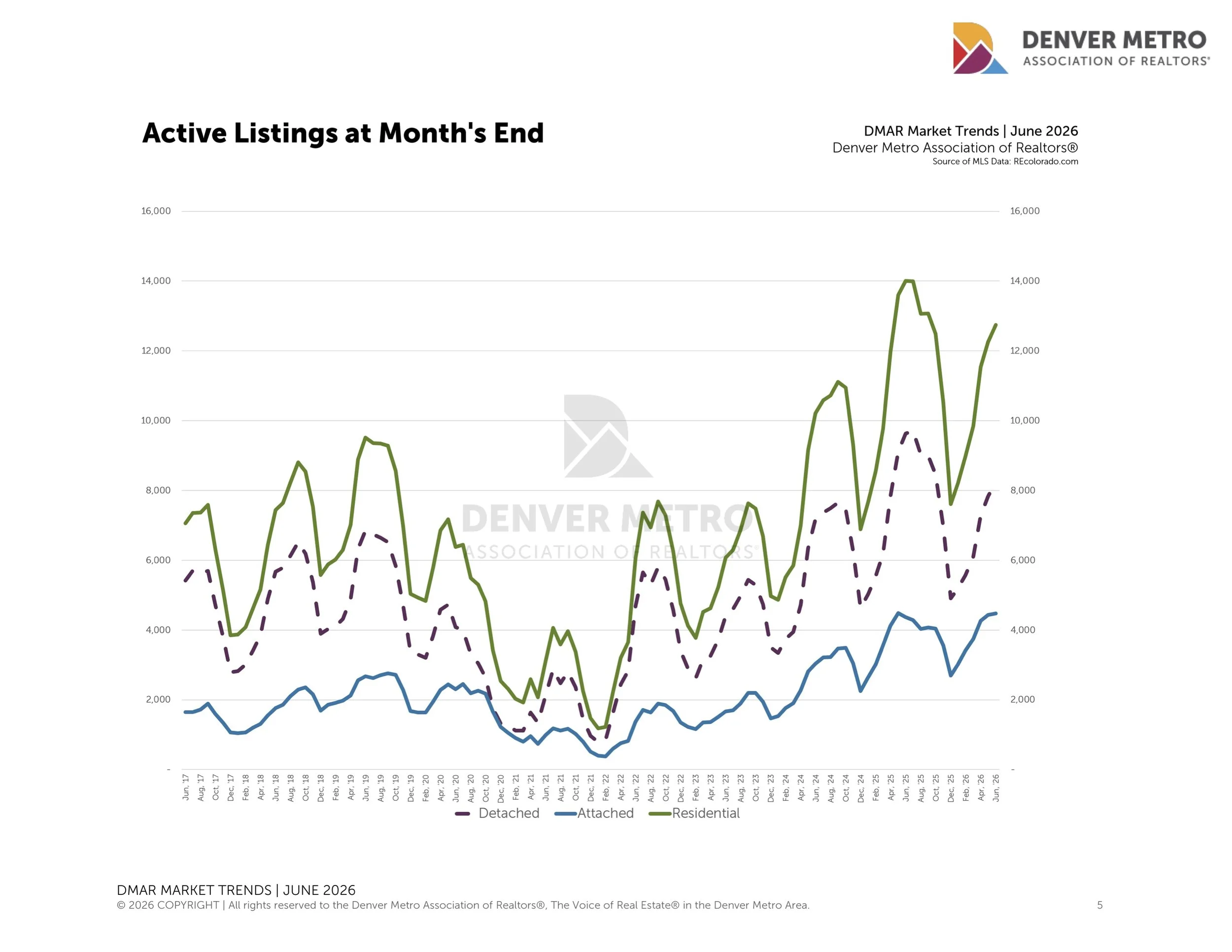
If you've been keeping your eye on the Denver metro housing market, things feel pretty balanced on the surface. Inventory is near decade highs, prices aren't changing much year over year, and buyers have some real leverage at the negotiating table.
But spend five minutes at an open house, and you'll see the real story playing out. Buyers aren't just admiring the paint colors anymore. They're running their fingers along the window sills, asking how old the water heater is, and questioning the roof's life expectancy before they've even peeked at the kitchen. Condition has become the thing that matters most. Buyers are gravitating toward the homes that need the least work. Nobody wants a project. They seem willing to be patient and wait for the right house rather than settle now and negotiate their way into something they don't love.
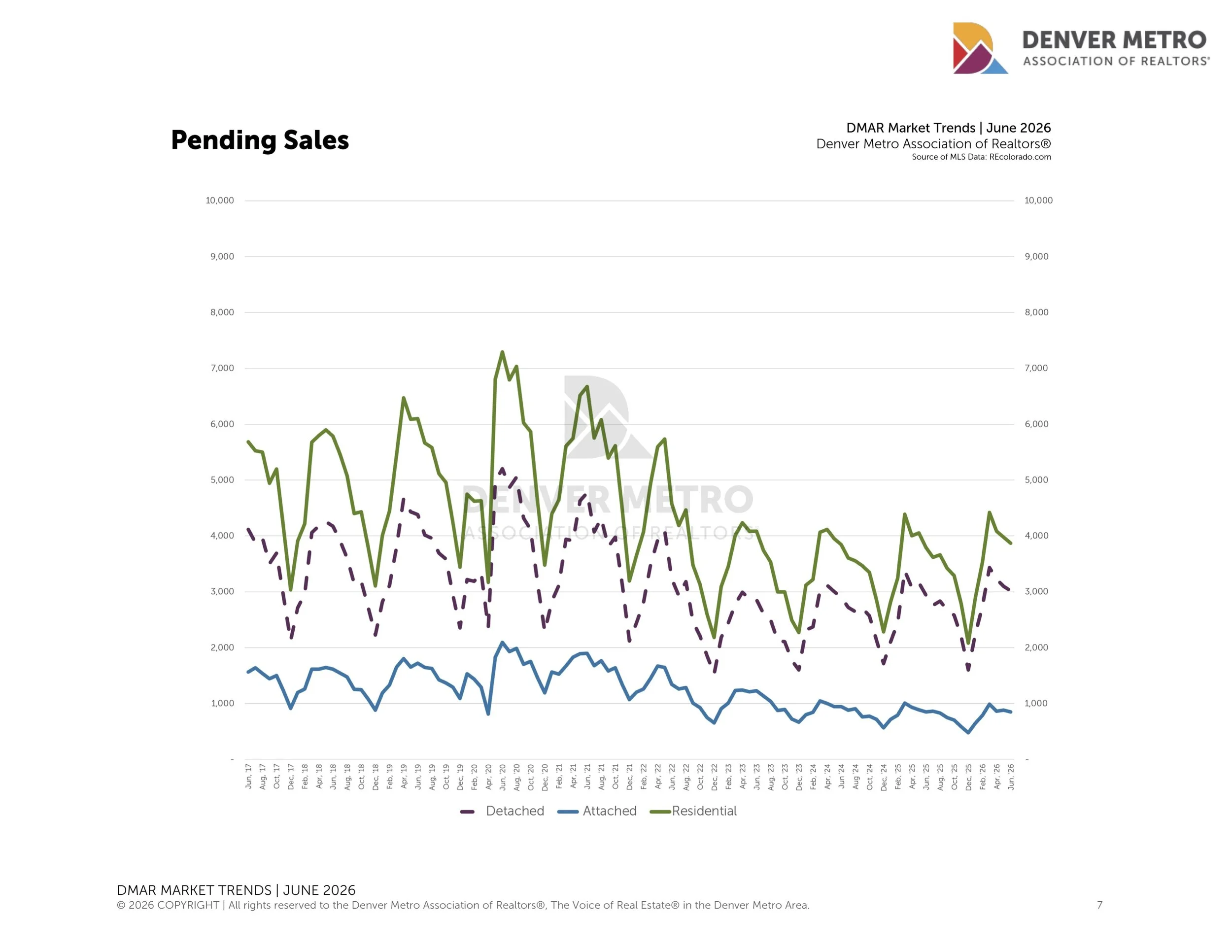
New listings and pending sales peaked back in April, then eased off in May and June. Year-to-date, new listings are down about 5.5%. Sellers are hesitating and wondering if listing is even worth the hassle right now. Once a buyer actually makes it to the table, sellers aren't giving up much ground. Close-price-to-list-price ratios are holding steady around 99% across almost every price range.
Detached/single-family homes are spending, on average, 14 days on the market. That's up over 27% from May to June. They ended June with a median sale price of $675,000, up 1.5% year-over-year, across just over 3,000 sales. Detached homes priced between $300,000 and $999,999, where well-maintained properties are in hot demand, have less than three months of inventory. Compare that to the $2 million+ tier, where inventory stretches out to 4.63 months, or the entry-level (under $300,000) at 4.44 months. Both of those pockets tend to have more distinctive or dated homes, and they're simply waiting longer for the right buyer to come along.
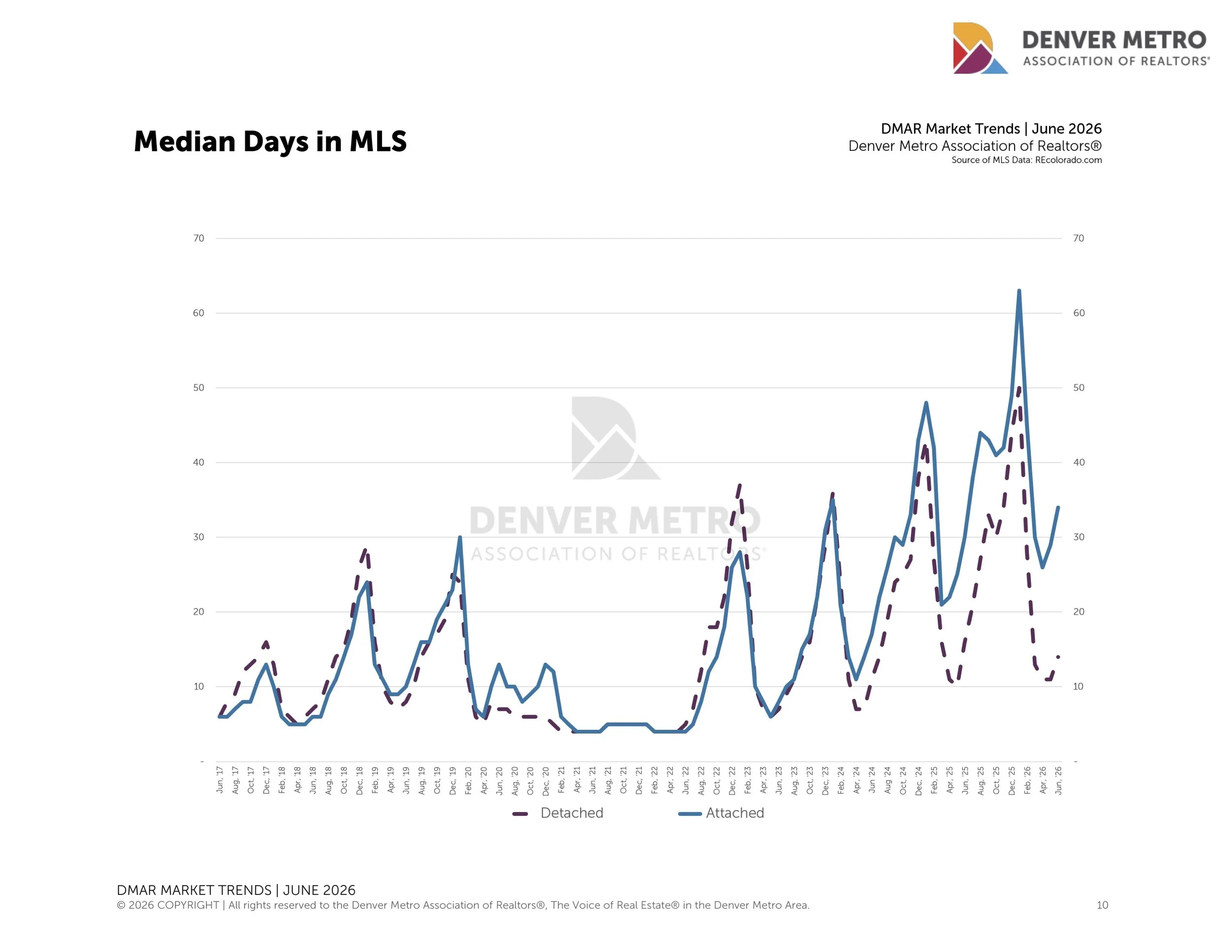
Attached homes (condos and townhomes) jumped even more, up 17% to 34 days. Median price sits at $391,750, down about 2% year-over-year, on a much smaller pool of 830 sales. A lot of this comes down to deferred maintenance and rising HOA costs: two things buyers are increasingly unwilling to overlook.
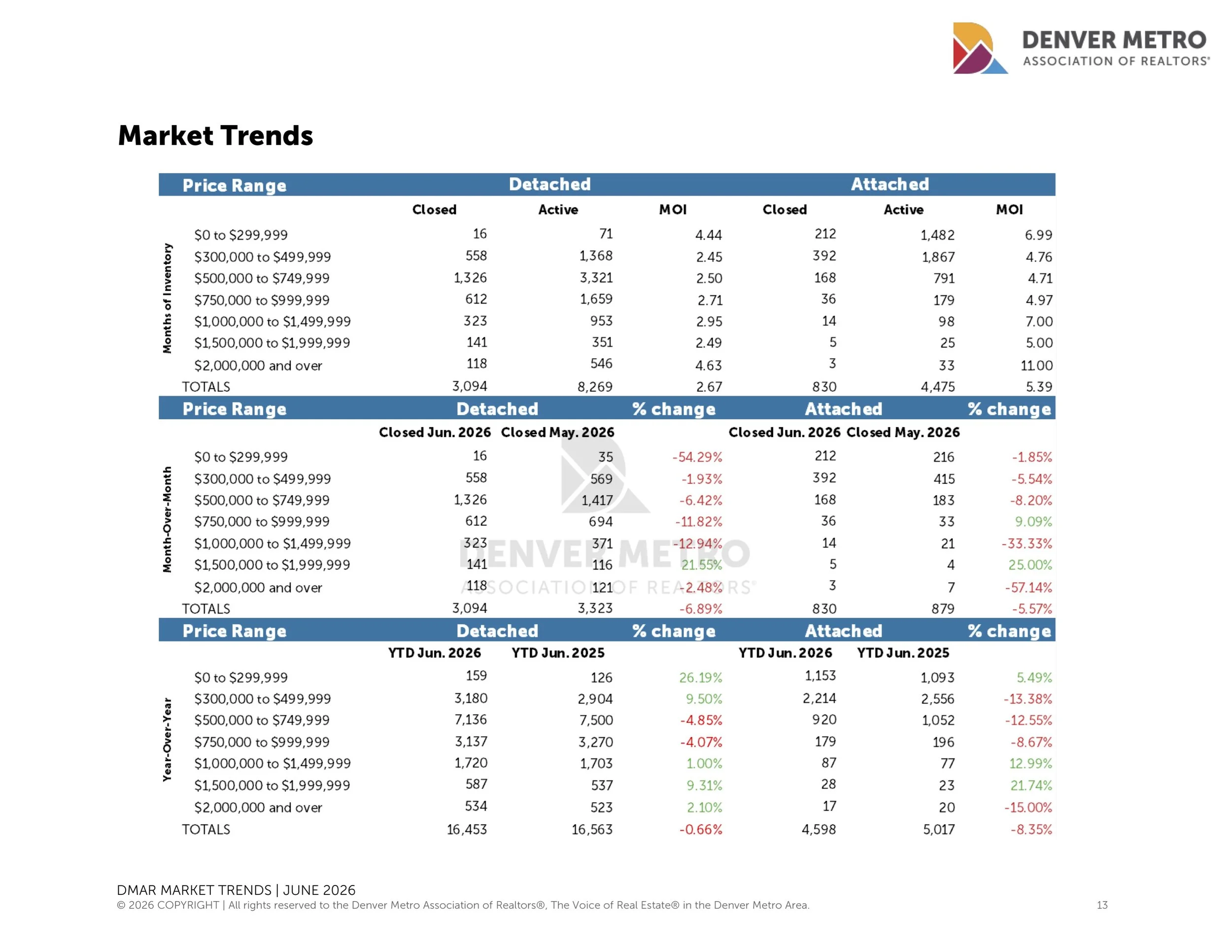
What This Means If You're Buying: Truly move-in-ready homes are getting scooped up and they're priced to reflect that. Everything else? It's sitting long enough that you, as a buyer, actually have some leverage. If you're open to a home that needs some updates or repairs, sellers are more willing than usual to talk about price concessions or offer inspection credits. There's a real opportunity here if you're willing to roll up your sleeves.
What This Means If You're Selling: The message is pretty simple: if your home is genuinely in good shape, it's still selling quickly and holding its price. But if your home hasn't sold yet, it's likely sitting on the market long enough for buyers to do their homework. Buyers today aren't just thinking about the repair list in front of them. They're mentally calculating what it'll cost to own the home over the next five to ten years, and they're baking that into their offer.
The Big Picture: Appreciation alone isn't doing sellers any favors anymore. Prices aren't climbing fast enough to ignore a tired roof or an aging furnace. Condition is really the biggest lever left to pull. And it rewards the sellers who've treated their homes like an asset worth maintaining all along, rather than a list of projects to put off for later.